Shanghai Seminar on US, Mexico & Japan IVF: Global One-Stop Fertility Solutions for Scientific Surrogacy Planning
- wangyingzhe
- Jul 8
- 5 min read

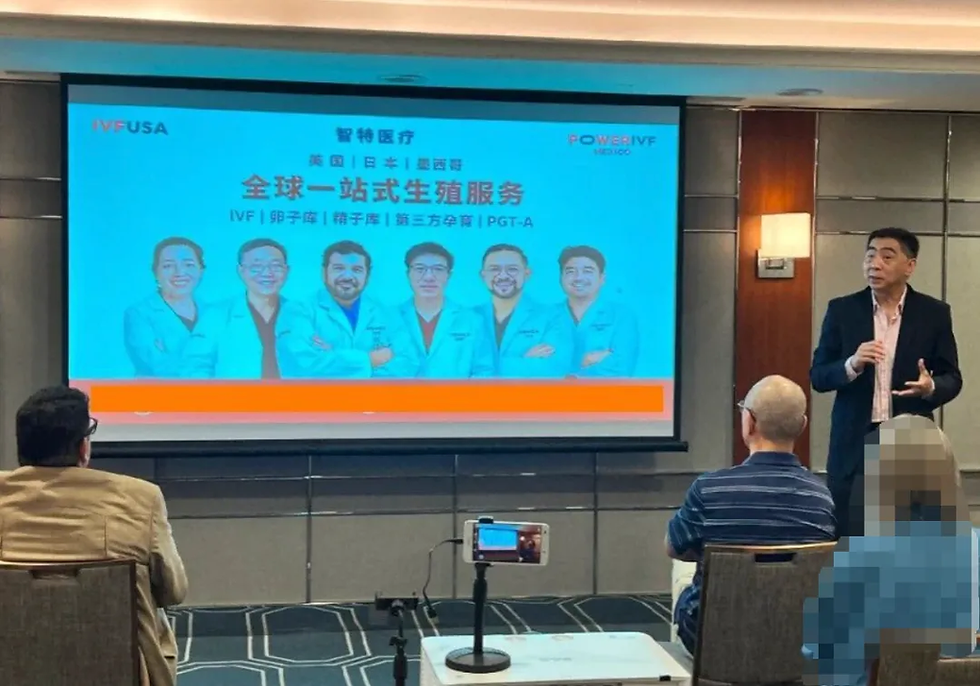
On July 5, 2026, POWER IVF hosted a major in-person seminar in Shanghai focused on overseas assisted reproduction, covering IVF and egg freezing in Mexico, the United States, and Japan. The event addressed the key concerns of older single women and families planning international surrogacy, bringing together three renowned reproductive medicine experts from overseas to provide in-depth discussions on fertility preservation, health protection, and family wealth succession.
Throughout the seminar, the POWER IVF team not only explained the rigorous quality control standards behind international embryology laboratories, but also engaged in extensive live Q&A sessions that directly addressed the real fertility concerns and common misconceptions faced by older and single women. The event provided attendees with evidence-based medical insights while helping bridge the information gap surrounding assisted reproductive technology.
01
From "Asset Protection" to the Foundation of Reproductive Technology
One case discussed involved a mother with assets exceeding one hundred million RMB, who had a serious conversation with her 25-year-old son about planning the next generation of heirs for the family. Faced with the choice between using his own genetic material combined with carefully selected healthy donor samples from distinguished cultural backgrounds (such as high-quality Jewish donor resources) or having an older family member take responsibility for family succession, the young heir immediately chose to personally carry the family's legacy forward.
This example reflects how high-net-worth families increasingly recognize the importance of long-term genetic planning. Within modern family risk management strategies, fertility planning has become a long-term investment in the future. Supporting this level of planning requires a highly sophisticated laboratory quality control system. During the seminar, two leading experts behind these technologies were introduced.
Chief Scientist Dr. Weihua Wang:
Dr. Wang is internationally recognized as a leading expert in reproductive laboratory management and embryology. For 25 consecutive years, he participated in and managed the Houston Fertility Institute (HFI), one of the top five reproductive centers in the United States. He was directly responsible for establishing quality systems across more than 20 embryology laboratories and played a key role in building one of the largest egg banks in the United States, achieving industry-leading expertise in cryopreservation and specimen banking.

POWER IVF Medical Director Dr. Gaytan:
Dr. Gaytan is one of Latin America's leading specialists in surrogacy management. He spent six years with Spain's IVI Group, one of the world's largest reproductive medicine organizations, before serving as Partner and Medical Director of IVI Mexico. During his seven-year leadership, IVI Mexico became one of Latin America's largest and most successful fertility centers. The center was later invested in by the globally recognized reproductive media company controlled by renowned Japanese embryologist Dr. Kuwayama, inventor of vitrification technology.

Both Dr. Wang and Dr. Gaytan emphasized that affluent families should not evaluate fertility centers based on promotional claims alone. Instead, they should carefully assess comprehensive performance data across every stage of the treatment process.

02
Critical Reproductive Decisions for Older and Single Women
During the Q&A session, several women facing important fertility decisions shared their real experiences.
One 38-year-old woman and another 43-year-old woman (AMH 0.36, AFC 3) explained that they had previously undergone multiple mild stimulation cycles at traditional Japanese fertility clinics, collecting only one or two eggs per cycle. After accumulating eleven eggs, they questioned whether continuing the same approach was worthwhile.
Dr. Wang explained that mild stimulation protocols use fewer medications but also retrieve fewer eggs per cycle. For older women, freezing single eggs creates a high-risk situation because thawing and fertilization later involve significant attrition.

For women aged 35 to 38 and older who still have approximately eight to ten antral follicles, repeatedly choosing mild stimulation may ultimately result in medication exposure comparable to standard stimulation while significantly extending treatment time and wasting valuable reproductive years. Dr. Wang emphasized that older women should let go of perfectionism, adopt a "You gotta get the job done" mindset, choose standard stimulation protocols, and prioritize freezing genetically screened Day 5 blastocysts.
Day 3 or Day 5 Embryos? AI Embryo Selection and Advances in Epigenetics
One attendee asked which developmental stage the laboratory currently uses for embryo transfer and whether artificial intelligence is involved in embryo selection.

Dr. Wang explained that the Mexico clinic exclusively cultures embryos to the Day 5 blastocyst stage because of its greater developmental stability. The laboratory system now combines artificial intelligence with traditional morphological assessment to improve embryo grading accuracy. In addition, POWER IVF collaborates with scientists from the Chinese Academy of Sciences to implement cutting-edge epigenetic testing technologies.
How Should Patients With a 0.4 mm Endometrium or Low AMH at Age 35 Make Decisions?
One attendee expressed concern about having an endometrial thickness of only 0.4 mm, while another asked whether a 35-year-old woman with low AMH but otherwise normal reproductive indicators should still pursue treatment.
POWER IVF specialists explained that although a 0.4 mm endometrium is indeed extremely thin, treatment options for improving uterine conditions are considerably broader than those available for ovarian function. Rather than proceeding directly with embryo transfer, physicians generally recommend individualized endometrial preparation using hormone therapy or medical approaches such as PRP before transfer.
For a 35-year-old woman with low AMH, specialists emphasized that egg quality generally remains favorable because of her age, making timely treatment worthwhile. However, single women selecting donor samples should never rely on chance but instead follow rigorous medical evaluation and legal procedures.
Do Ovarian Stimulation Medications Cause Significant Side Effects or Weight Gain?
Addressing one of the most common concerns among women, the experts responded directly:
"If you're an older woman approaching your fertility deadline, the only question should be whether temporary weight gain could help you achieve a healthy baby."
Standard ovarian stimulation typically lasts only 10 to 12 days using subcutaneous injections. The hormones are naturally metabolized and eliminated by the body within a short period and do not cause permanent weight gain, premature ovarian failure, or cancer. Women should not allow these misconceptions to prevent them from pursuing treatment.
The discussion again highlighted that among high-net-worth families, fertility planning has evolved beyond traditional concepts of marriage and childbearing. It has become an essential long-term strategy for protecting both family health and future generations.

Regardless of personal achievements in business or professional life, biological realities remain unchanged. Using science proactively to preserve reproductive opportunities has become an increasingly important part of long-term family planning.
03
An Integrated Cross-Border Fertility Network
After explaining the medical foundations, the seminar introduced POWER IVF's integrated Japan–United States–Mexico multi-center fertility network designed to meet diverse international reproductive needs.

Japan Multi-Center Network:
Japan offers highly refined laboratory techniques, convenient travel, and short flight times, making it particularly suitable for older and single women who wish to efficiently complete egg freezing close to home while minimizing time costs.
United States Multi-Center Network:
The United States offers some of the world's most advanced reproductive technologies and one of the strongest legal frameworks, making it an ideal choice for families seeking top-tier medical care and comprehensive legal protection.
Mexico Multi-Center Network:
Mexico provides highly inclusive reproductive policies. Following the Mexican Supreme Court's landmark ruling in 2021, assisted reproductive services entered a new era of legal development. Single individuals and diverse family structures are clearly protected by law.
Mexico also permits the legal international transportation of reproductive tissues, including sperm, eggs, and embryos. As one of the host countries of the upcoming FIFA World Cup and an advanced economy, Mexico offers safe, attractive urban environments such as Roma Norte and Polanco. Comprehensive fertility treatment costs are approximately one-third of those in the United States, providing families with greater flexibility when designing personalized reproductive plans.
The successful conclusion of this seminar provided high-net-worth families with a clearer understanding of global fertility planning while helping them move beyond common misconceptions. Moving forward, POWER IVF will continue leveraging its international network of fertility centers across the United States, Mexico, and Japan, together with comprehensive legal support and world-class medical resources, to help independent women and older families build healthier futures and achieve long-term family continuity.


Comments